
Senior medical and public health leaders have been sharing with me that they are increasingly concerned about their wellbeing, especially those currently undergoing organisational change.
We’re often so busy trying to cope and keep going on a day to day basis that we don’t realise the level of cognitive and emotional load we are carrying.
Coaching for medical and public health leaders
The modern health leadership workplace is characterised by ‘permacrises’ and organisational change is the new normal. It’s happening at a large-scale and with increased frequency.
As well as leading though uncertainty, medical doctors in leadership roles, public health directors and public health leaders, and global health leaders need to pivot from strategist to staff wellbeing coach within the space of minutes recurrently on a daily basis. This demands exceptional psychological flexibility and self-care. I’ve been training in teaching breathwork to my medical, public health and global health coaching clients, here is a simple exercise we can all use on tap – it’s portable to any situation, and noone will know you’re doing it! I’ll write more blogs on breathwork later in the year with some more advanced techniques so do look out for them!
Your breath holds the key to every other system in your body
Here is a quick way to start to learn the practice of breathwork.
When the pressure around you is building, you can learn to activate your ‘ventral vagus nerve’ through the conscious use of your breath – and take advantage of one of the few ways you can directly and immediately start to gain control.
Little and often breathwork for doctors and public health leaders
It takes 90 seconds to switch from our activated or stressed (adrenaline, cortisol and dopamine) emotional states to activating our parasympathetic nervous system – our ‘rest and digest’ safe, contented, soothed system. If you’re new to breathwork, it’s best to practice little and often. Over time you will learn to rapidly and discretely activate your parasympathetic nervous system and calm yourself down without anyone being aware of what you are doing. This will enable you to be the calm in the eye of the storm.
Practice this now – Simple Diaphragmatic Breathing for Health Leaders
Step 1
Without trying to change your breath, place one hand over the centre of your chest, and one over your abdomen (belly). Notice what happens to each of your hands when you breathe in, and when you breathe out. Where do you feel the greatest movement in general? Which hands move with the inbreath, and the outbreath? How fast or slow are you breathing – it can be helpful to use a timer to count over a 30 second period so that you have a baseline to track over time. Are you using your mouth or your nose? Some of us may have started to draw our bellies inwards on our inbreath: instead of letting our belly expand outwards as we breathe in, we may have learned to keep our abdominal muscles always ‘on’ or active. How are you breathing at the moment? Just notice without judging or trying to change anything for a minute or so.
Step 2
We want to learn how to breathe our diaphragm effectively so that air can get into the lower part of our lungs and activate our ventral vagus nerve from the diaphragm stretching. When we’re stressed, either acutely or chronically, we can start to breathe with our chests rather than our diaphragms.
If your breath is moving more in your chest then your belly then you can consciously contract your belly on the outbreath from time to time. This will allow your diaphragm to relax and for you to reset your breathing pattern: your belly will then be able to expand more fully on your next inbreath. Use your hands (as per Step 1) to keep track of where your breath is moving in your body – it should be increasingly in your belly and less in your chest.
When stressed, we also tend to take shallower, faster breaths too. This tells our body we are on high alert, so we need to make sure that we regularly check in with ourselves that we are both using our diaphragm in skilful ways, and that we are slowing the pace of our breathing down.
Start to count the length of your in-breath and out-breath 1-2-3, not trying to change the length yet, just so that you know more clearly what your breath is doing right now. Keep the breath soft and shallow. We’re not trying to do ‘deep breathing’, just making subtle changes.
Step 3
Once you feel comfortable with Step 2, we can learn to lengthen our outbreaths. Breathe slightly more slowly on your exhale than usual by using pursed lips as if using a straw or through quiet humming, and try to make it a little longer. Using counting can help too.
Now experiment with slowing down the rate of your breathing. If your in-breath is currently 3 seconds, try counting to 4 on your exhale. If it’s currently 4, try counting to 6. Move towards a 1:2 ratio over time, eg 3 in:6 out; 4 in:8 out etc. Practice for a few breath cycles and build up over time to a minimum of 3 minutes once a day.
Nose breathing helps slow the breath down, and also produces chemicals which fight infection. It may feel uncomfortable at first if you’ve got used to mouth breathing, so focus on gently closing your mouth and breathing through your nose for a few cycles.
Let me know how you get on!
I’d love to know how you found this basic breathwork exercise. Please email me to let me know fiona@fionadayconsulting.co.uk . I’ll share more advanced techniques in a future blog.
Dr Fiona Day is a Chartered Coaching Psychologist and EMCC Master Practitioner Coach & Mentor who specialises in the psychology of medical and public health leaders under pressure. She works at the intersection of medicine, public health, psychology and system leadership and can help you thrive like no one else
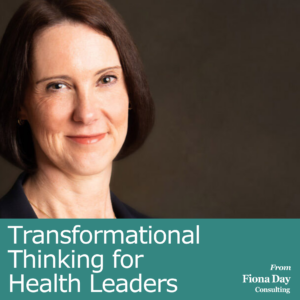
Looking to develop your leadership quickly and meaningfully? You can access 3 hours of FREE CPD through Fiona’s Health Career Success Programme—a practical, insight‑packed introduction to career clarity and leadership growth. And if you want inspiration on the go, tune into her podcast, Transformational Thinking for Health Leaders, where she shares tools, strategies and expert conversations designed to elevate your leadership thinking. Passionate about developing confident, values‑led leaders, Fiona provides high‑impact coaching to doctors, public health specialists and senior health professionals. She also trains health leaders in coaching and mentoring skills at EMCC EQA Foundation Level, helping them unlock the potential in their teams and organisations.
Book a Confidential Consultation today!