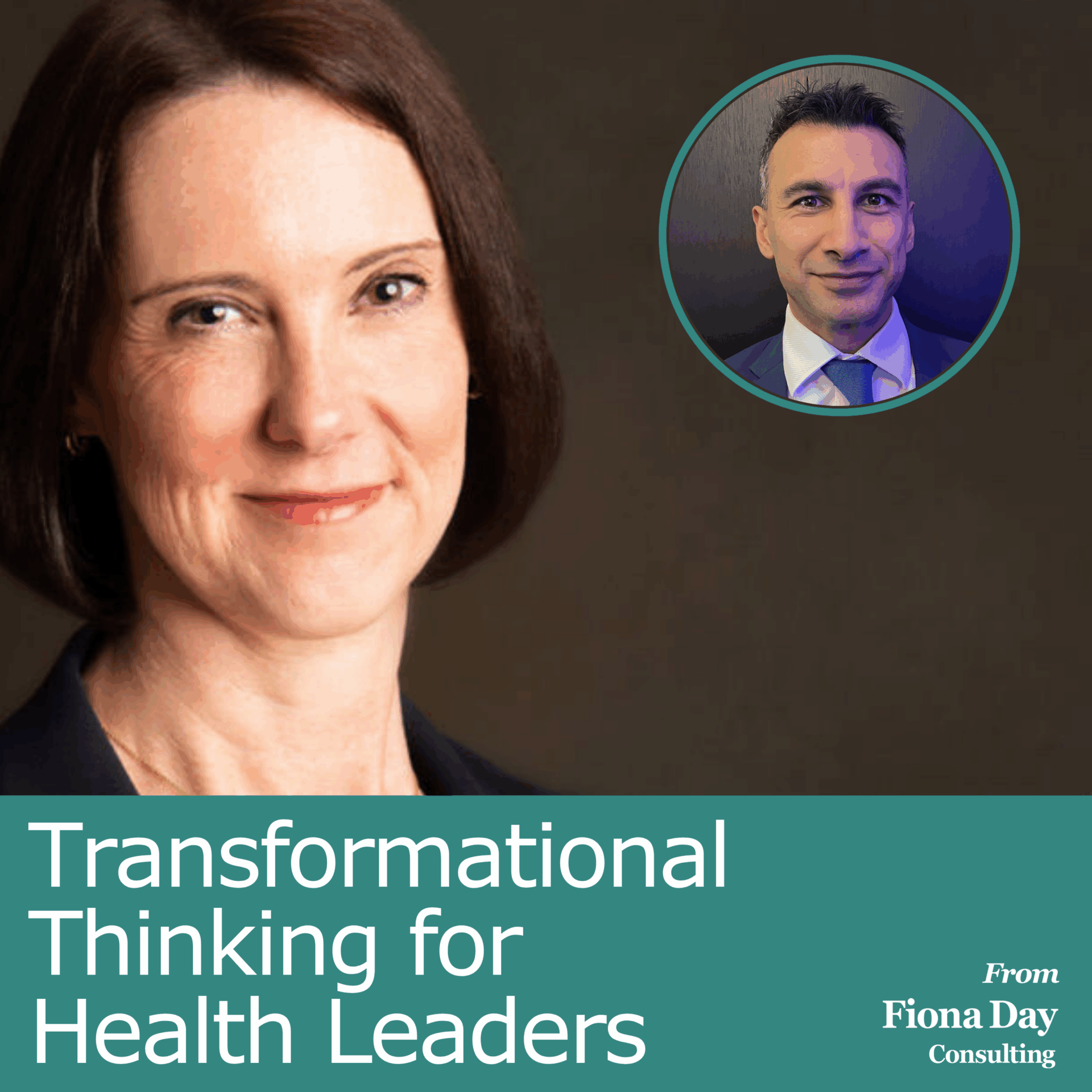

In this episode of Transformational Thinking for Health Leaders, I spoke with Dr Imran Ahmad, a GP board partner for a large primary-care organisation in London, GP training programme director, and integrated-care system clinical lead.
Imran’s story reflects the reality for many senior clinicians — how to honour your core values in patient care while stepping into roles that demand broader vision, strategy, and influence. His journey from full-time GP partner to system-level leader offers profound lessons about adaptability, courage, and self-reflection.
What This Means for Health Leaders
When Imran described his early years in general practice, his words captured the heart of traditional medicine: “continuity of relationships was everything.”
That dedication to service never left him, yet a family move created an unexpected pause — a chance to ask new questions about purpose and direction. From that reflection emerged a desire to expand his impact beyond individual consultations to the health system itself.
What I find so resonant is how Imran frames leadership as an evolution of service. He reminds us that leadership doesn’t start with titles or committees but with curiosity and self-awareness. In his words:
“It’s never too late to re-evaluate your direction… Leadership journeys often begin with self-reflection, curiosity, and purpose — not with positions and titles.”
That mindset shift — from doing to leading — requires letting go of certainty, delegating more, and learning to influence through others rather than direct action. It’s what psychologists call vertical development: expanding the inner capacity to think systemically and act through complexity.
Applying the Insight
Imran’s reflections highlight several transferable lessons for health leaders navigating change:
- Revisit your “why”. Periodically step back from operational pressures and ask whether your current direction still aligns with what matters most.
- Invest in adaptive capacity. Leadership in healthcare is dynamic; developing emotional intelligence and flexibility is as essential as technical knowledge.
- Create safe spaces for dialogue. Imran’s listening sessions across his organisation transformed resistance into shared ownership — a hallmark of psychologically safe leadership.
- Delegate as a growth tool. True delegation isn’t loss of control; it empowers others and builds future leaders.
- Model continuous learning. Coaching, mentoring, and reflective practice are not luxuries; they’re vital supports for sustainable leadership.
As Imran shared, “Leadership is contextual, it’s dynamic — it’s not a one-size-fits-all approach.” That humility and curiosity are exactly what our healthcare systems need to thrive.
Key Takeaways
- Adaptive leadership begins with reflection, not position.
- Delegation and trust create psychological safety and shared ownership.
- Clinical credibility remains the foundation of effective system leadership.
Reflective Practice Questions
- When was the last time you paused to re-evaluate your professional direction, and what insights emerged?
- How comfortable are you with delegating responsibility — and what beliefs might make it challenging to let go?
- What does adaptive leadership mean to you in your current context?
- How do you model emotional intelligence and psychological safety within your teams?
- Which of your personal values guide you most strongly in times of uncertainty or change?
Mini-FAQ
How can clinicians transition into leadership roles successfully?
Start by recognising how much leadership skill already exists in your clinical experience — communication, decision-making, empathy, and resilience — and build from there through reflection, coaching, and deliberate practice.
What helps leaders stay effective under pressure?
Prioritisation, boundary-setting, and cultivating emotionally intelligent teams. As Imran demonstrates, effective leaders step back from “doing it all” and instead create the conditions for others to thrive.
Listen & Learn More
You can listen to my full conversation with Dr Imran Ahmad on Transformational Thinking for Health Leaders and explore more evidence-based leadership insights here.
Dr Fiona Day is a Chartered Coaching Psychologist accredited by the British Psychological Society, and by EMCC as a Master Practitioner Coach & Mentor. She has experience as a system and Board-level medical and public health leader. Fiona focuses on coaching medical and public health leaders, and also trains health leaders in coaching and mentoring skills at EMCC EQA Foundation Level. Get 3 hours of FREE CPD with Fiona’s ‘Health Career Success Programme’ here, and listen to her podcast ‘Transformational Thinking for Health Leaders’ here.